Ellis Lehmann · 30 October 2026
Bridge Restoration Turns Pinebrook Landmark into Center for Regional Storytelling and Arts Advocacy
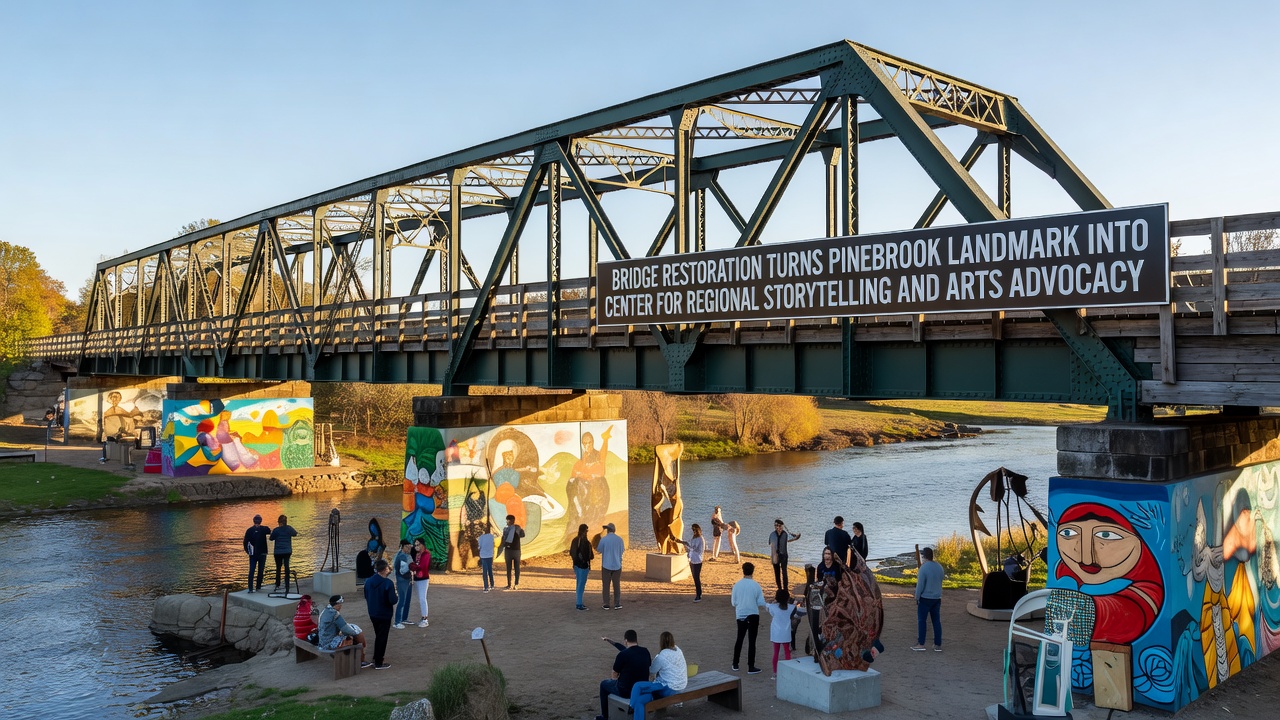
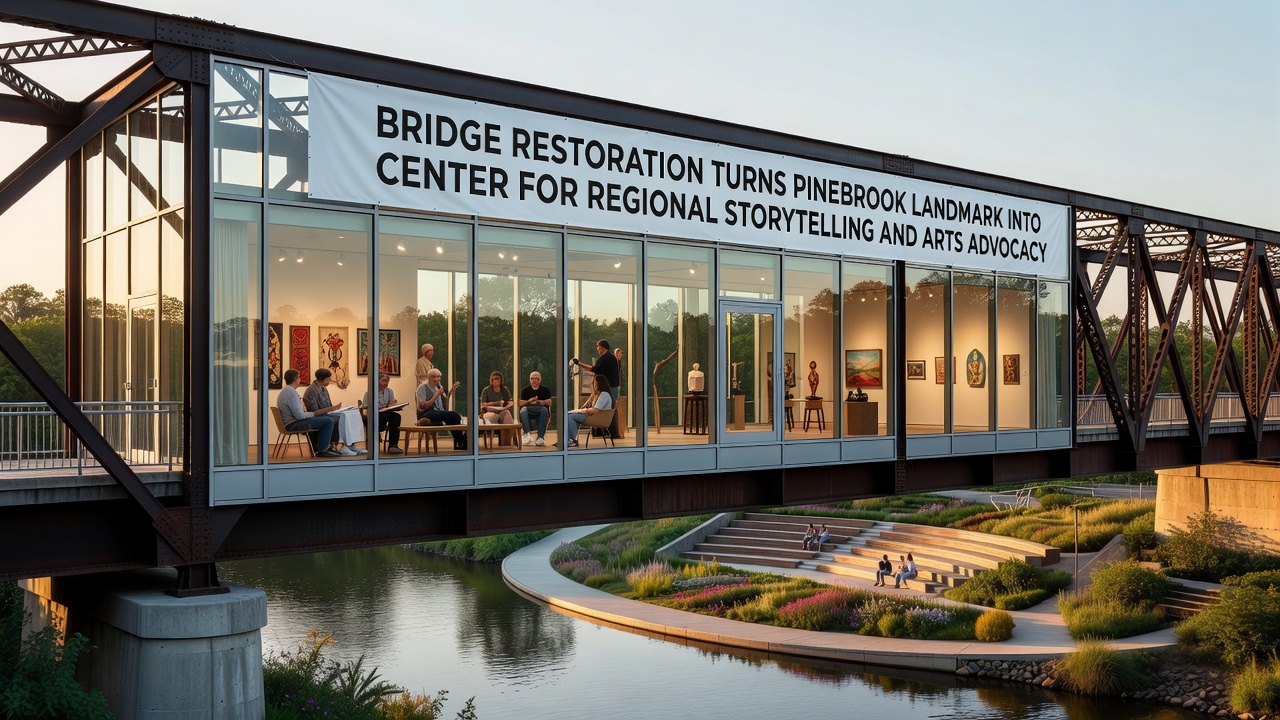
The historic Pinebrook Bridge, originally constructed in the late 1920s as a vital crossing over the regional river system, has undergone extensive restoration that transforms its former industrial role into a dedicated hub for storytelling programs and regional arts initiatives; workers completed structural reinforcements, added climate-controlled exhibition areas, and installed interactive digital displays that highlight local oral histories collected over decades.
Restoration crews addressed corrosion issues in the steel framework while preserving original architectural elements such as the arched supports and riveted joints, according to project documentation from the Pinebrook Historical Preservation Society. New additions include modular performance platforms along the pedestrian walkway that accommodate rotating exhibits from artists across the surrounding counties, and these platforms connect directly to soundproofed alcoves designed for recorded narrative sessions that capture community memories of early settlement patterns and seasonal migrations.
Restoration Process and Design Features
Engineers coordinated with local artisans to integrate salvaged timber from decommissioned barns into the interior paneling, which creates warm acoustic environments suitable for live readings and theater workshops; this approach draws on techniques documented in preservation guidelines issued by the National Park Service, where similar adaptive reuse projects have extended the functional lifespan of aging infrastructure without compromising historical integrity. Funding came through a combination of state heritage grants and private contributions that totaled several million dollars, enabling the installation of energy-efficient lighting systems that illuminate both the bridge's structural details and the surrounding landscape at dusk.
Accessibility upgrades feature ramps with integrated handrails modeled after traditional designs, along with braille signage that describes key historical markers along the route. Observers note that these modifications allow broader participation in events scheduled throughout the year, including those planned for October 2026 when the center hosts its inaugural regional storytelling festival featuring multi-day workshops and outdoor performances.
Programming and Community Integration
Programming at the restored site emphasizes regional narratives tied to the area's agricultural heritage, river ecology, and evolving artistic traditions, with weekly sessions that pair local authors with visiting scholars for collaborative storytelling exercises. Arts advocacy components include open studio periods where participants develop pieces that address themes such as environmental stewardship and cultural continuity, and these activities occur in dedicated galleries that rotate displays every six weeks to showcase work from emerging creators in adjacent communities.
Data compiled by regional tourism boards indicates increased foot traffic following the reopening, with patterns showing strong attendance from families attending narrative sessions that explore indigenous land use histories alongside contemporary interpretations. Partnerships with educational institutions facilitate school visits that incorporate hands-on modules on bridge engineering and oral history collection, and these programs align with curriculum standards established through collaborations reported by the National Endowment for the Arts.
October 2026 events center on a multi-week festival that incorporates lantern-lit walks across the bridge, where storytellers share accounts of past floods and community resilience, while adjacent pop-up installations invite visitors to contribute their own recorded reflections for an evolving digital archive. Organizers coordinate with transportation services to manage peak attendance during festival weekends, ensuring safe access along expanded trail networks that link the site to nearby parks and cultural venues.
Broader Regional Impact
Local businesses report expanded opportunities for vendors who supply materials for workshops and host pop-up markets during major gatherings, while advocacy efforts supported at the center have led to documented increases in grant applications for similar preservation projects in neighboring towns. Research from university-led studies on adaptive heritage reuse, including findings published through Australian government heritage resources, shows that such conversions often generate sustained economic activity through tourism and educational programming that extends beyond initial restoration phases.
Volunteer networks play a central role in maintaining the site's programming calendar, recruiting participants who contribute both technical skills for exhibit curation and personal accounts that enrich the storytelling archives. These efforts create layered content that connects individual experiences to wider regional themes, fostering connections among residents who might otherwise remain disconnected from shared cultural resources.
Conclusion
The transformation of the Pinebrook Bridge demonstrates how targeted restoration can repurpose historic structures for contemporary cultural functions, with measurable outcomes in visitor engagement and program diversity that continue to develop through ongoing community input and scheduled expansions planned into 2026 and beyond.